Recognized as energy-intensive operations, drying and dewatering processes constitute approximately 15% of the total energy consumption within the Dutch industrial landscape. Many products require some form of drying during their manufacturing or processing, spanning from paper and chemicals to various food products. However, the industry is currently grappling with a mounting array of energy-related challenges – ranging from escalating costs and volatile energy markets, to sustainability concerns – particularly concerning the removal of water from raw material streams.
To feed the growing world population without placing an untenable burden on our environment, we need to redesign our food industry in a sustainable way, with new process technologies that help us maximize nutritional values and minimize energy consumption, as well as waste in the food chain.
The food industry is involved in the protein transition where a shift towards more plant-based than bovine proteins is evident. The processing of these categories is even more energy-intensive than for example for dairy products. In order to accelerate the protein transition more sustainable processing of plant-based, fermentation-based and also hybrid products is a large challenge.
Our vision
Our vision is a future where process technologies are the driving force behind a sustainable food transition, with a particular emphasis on minimizing energy consumption. We strive for the development and implementation of advanced technologies that not only increase the efficiency of food production but also maximize the use of renewable energy sources. Through this focus, we aim to play a leading role in shaping a food system that is not only resilient and ecologically responsible but also energy-efficient, thereby ensuring a sustainable future for generations to come.
Drying is one of the most energy-consuming processes in the process industry
Our mission
Our mission is to develop innovative process technologies that promote the food transition with an explicit focus on optimizing energy consumption. We strive to develop groundbreaking methods that enhance the sustainability of food production, reducing reliance on traditional energy sources and embracing sustainable, energy-efficient alternatives.
Our efforts are aimed at creating a food system that is not only healthier and more environmentally friendly but also significantly consumes less energy.
Process industry challenges we work on
More energy efficient processing
Developing technologies that increase the efficiency of food processing, with a focus on reduced energy usage, minimization of waste streams and optimization of raw materials. Examples include energy-intensive technologies for dewatering and drying and emerging assisting technologies. An additional challenge is processing an increasing stream of plant-based or fermentation-based products which generally require three times more energy than conventional streams, such as dairy.
Valorization of residual streams
Developing energy-efficient processes that convert residual streams into valuable products. This preserves the energy used upstream in the chain to prepare raw materials for processing. Examples include mild fractionation of residual streams into food ingredients. Another related challenge is reducing fouling and improving cleaning in place and maintenance efficiency.
Circularity of Water in Drying and Dewatering processes
Working on innovation needs of water availability, use and discharges. Water is rapidly becoming a critical asset for the food processing industry. Shortages are expected around 2030, while stricter extraction permits and discharge regulations are likely to be implemented in the near future. In our whitepaper ‘Water availability for Food Production under pressure’ we share the potential solutions and project initiation ideas.
Digitalization of food processing processes
Implementing advanced digital technologies, such as Artificial Intelligence and Digital Twins, in process control systems that optimize themselves for energy consumption, product quality, and food safety. Social aspects for this implementation are also to be regarded as well as provision of required datasets.
Stakeholder management
Addressing these technological challenges requires an integrated approach to research, development, and implementation of process technologies, in close collaboration with industry, academic institutions, and policymakers and across the value chain. ISPT is equipped to initiate, coordinate, and translate this approach into implemented results in a trustbased environment together with partners.
Our portfolio
We employ a comprehensive strategy that initiates projects that span the entire value chain. Our aim is to bring together relevant stakeholders to promote cooperation between these crucial entities. Previous projects have yielded significant progress, enhancing our comprehension of the fundamental principles governing drying and measures to reduce energy consumption. In all of our projects, the interaction between industry, research institutes and tech providers is key. We aim to realize cost-effective R&D and ensure the effective and rapid transfer of technology from the laboratory to industrial practice. The impact that we aim for in our Drying and Dewatering Program projects is described in more detail on the project pages of our running and finalized ISPT projects.
See below our extensive Program Portfolio.
Partnership with the Dutch Drying Community (NWGD)
Within our program Drying and Dewatering we work in close partnership with the Dutch working society on drying: Nederlandse Werkgroep Drogen (NWGD). We have the joint ambition of innovating the area of drying technology in the Netherlands.
NWGD stimulates the development and application of sustainable drying technology by connecting experts, amongst others via networking events.
Mild Fractionation for Food
The Drying & Dewatering Program is closely related to the Mild Fractionation for Food program. We aim at closing the nutrient cycle. It is our mission to explore new concepts and technologies for the extraction of complex molecules and proteins from various process flows, and help companies in the food industry to achieve their sustainability and business goals.
With food industry partners, tech providers and academia we investigate fractionation methods to extract ingredients for their specific nutritional value or functionalities; We aim at developing strategies to fractionate raw products into valuable products, to valorize their by-products, to improve or develop new processing methods for fractionation, concentration and isolation in order to facilitate more sustainable processing of products remaining their product quality, and also to develop new products.
Latest news
ISPT Conference ’26: Innovation through Connection and Collaboration – with a Capital C
ISPT brings the industry together: ‘To achieve a circular economy, you need to rely on other parties’

NWGD Symposium: Drying in Turbulent Times

Circular Water Use becomes Strategic Priority for Food Industry
De Energie Gasten podcast: aflevering 1 met ISPT

‘Zonder procestechnologie geen transitie’

2024 achievements: energy-efficient drying technologies for the food industry
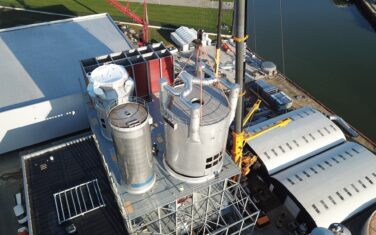
Zeolietsorptiedroger realiseert 40-45% energiebesparing bij sproeidrogen
Let’s get in touch

Peter de Jong

Ronald Korstanje

Anne van der Zwaan
Related projects

FreezeCon – Freeze Concentration

Engender: Compact Energy Efficient Dryer

GRIP on Drying

EEMS – Energy Efficient Milky Sprays
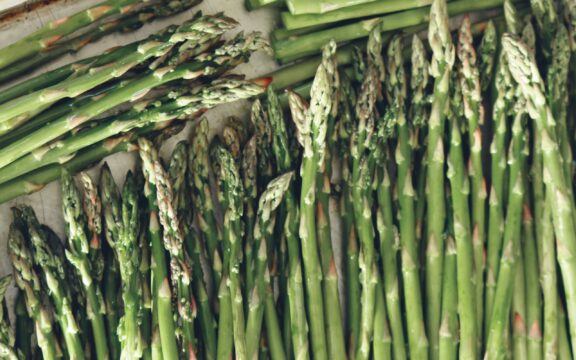
W2T – Waste2Taste
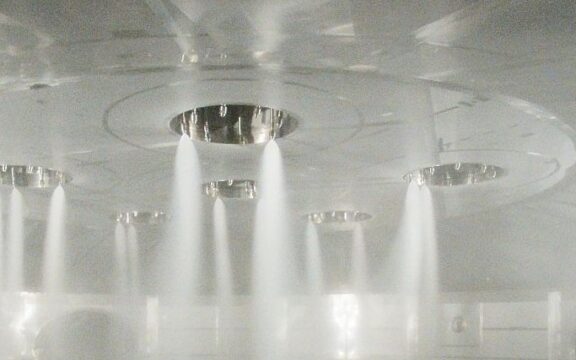
MilDeWat – Breakthrough Mild Dewatering Technologies

Single Droplet Modelling
Thin Film Drying
RMZD – Radial Multi-Zone Drying

DRAGONS Egg – Increasing energy efficiency by steering DRoplet AGglomeratiON in Spray dryers

PINcHED – Process INtegrated HEat pump Drying
Electrified – Electrically driven non-thermal dewatering of biomass

The Heat Is On
StAgglop: Reducing energy use and material loss by better control of agglomeration during spray drying

SEUSS – Saving Energy by Upcycling of Side Streams

Probiotics – Low energy living bacterial food formulations