OOPS!
Looks like that page wasn’t sustainable enough.
Let’s get you back on track:
- Visit our homepage
- Meet our team
- Read the latest news
- Get in touch
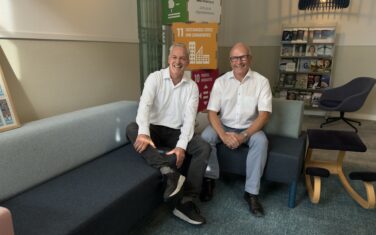
‘We know which organisations are involved’: ISPT is building partnerships with the Circular Plastics Initiative and ISPT Brains
As an independent facilitator, ISPT has been building consortia for twenty years comprising organisations from various sectors of the process industry. ‘We know which organisations are active in the various...

Asymmetric Bias Effects of Polyelectrolyte Brushes: A Systematic Electrochemical Impedance Spectroscopy Study
Polyelectrolyte brushes are promising surface modifications, and it is known that their properties are affected by environmental conditions
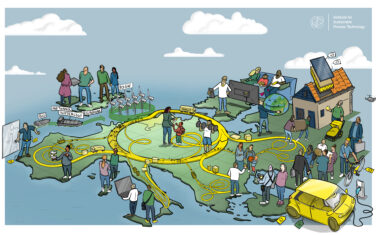
ISPT brings the industry together: ‘To achieve a circular economy, you need to rely on other parties’
Individual companies cannot make the transition to circularity on their own. ‘We are seeing a shift from innovation within a factory gate to innovation through collaboration between companies, supply chains...

How Cross-Linking Influences the Electrochemical Properties for Brush-Functionalized Electrodes
Hydrogel brushes comprise cross-linked polymer chains that are attached at one end to a substrate. Their networkarchitecture promotes electrochemical stability, which renders these materials suitable for electrochemical applications. However, the...
Electric and Solvent Stability of Polymer Brushes Are Dictated by Different Design Principles
In this study, we compared the solvent and electro-stability of different polymer brushes and brush-anchor combinations.

External event
NWGD Symposium: Drying in Turbulent Times
The Netherlands Working Group on Drying (NWGD) invites you to its annual symposium about industrial drying technology.
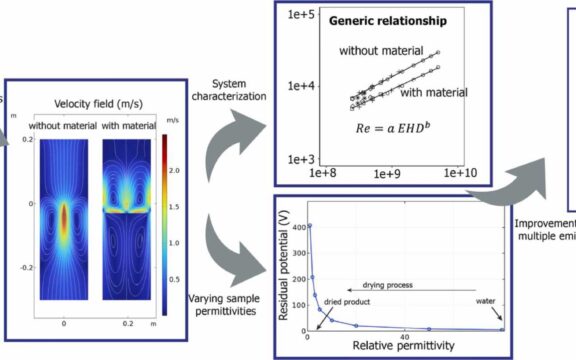
Multiphysics modeling of corona wind generation for electrohydrodynamic (EHD) drying of thin films
We present a multiphysics model to simulate corona wind generation during EHD drying of thin films.
Circular Water Use becomes Strategic Priority for Food Industry
The ISPT Drying & Dewatering Program Day (April 21, 2026) focused on optimizing industrial water use under increasing scarcity, stricter regulations, and climate pressures.
Whitepaper: Water Availability for Food Production under Pressure
On 21st of April 2026, the ISPT Drying and Dewatering Program hosted a brainstorming session at its office in Amersfoort. The insights are captured in this whitepaper

SEUSS – Saving Energy by Upcycling of Side Streams
The shift to plant‑based proteins demands smarter, cleaner processing. SEUSS develops new ways to reduce energy use and recover valuable resources from side streams. In Short Energy-related challenges The protein...
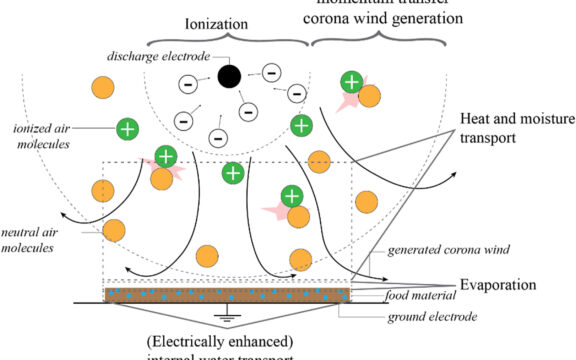
Material property changes during electro-hydrodynamic drying (EHD): a closer look into the falling rate period
Electrohydrodynamic (EHD) drying offers an alternative to hot air drying thanks to its lower energy use and lower operating temperatures. EHD drying benefits from enhanced convection induced by the corona...
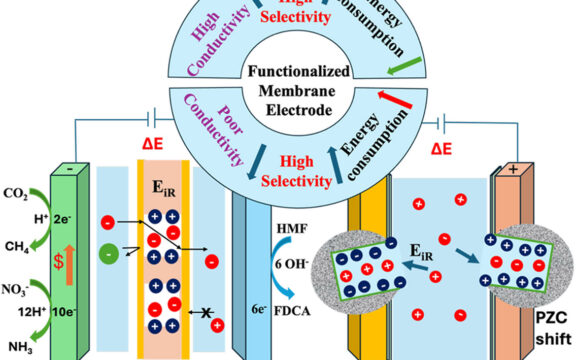
Critical evaluation of factors influencing the specific energy consumption of electrically driven membrane separation technologies
Electrodialysis (ED) and capacitive deionization (CDI) are electrically driven separation technologies with strong potential to advance renewable and sustainable goals, as they can be powered by renewable electricity, while enabling...
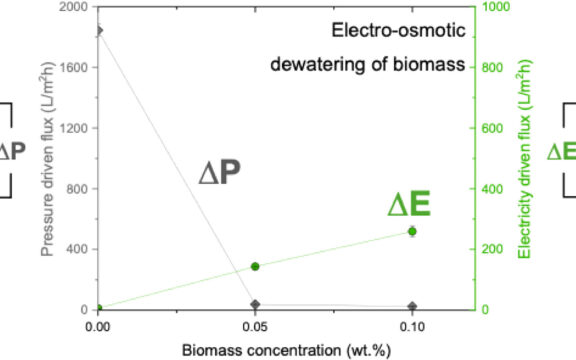
Electro-osmotic membrane dewatering of biomass: influence of membrane morphology, surface charge and process parameters
Formation of the EDL at a negatively charged surface (red) and its electromigration under an applied electric field resulting in the slip of adjacent water layers, known as electro-osmotic flow.
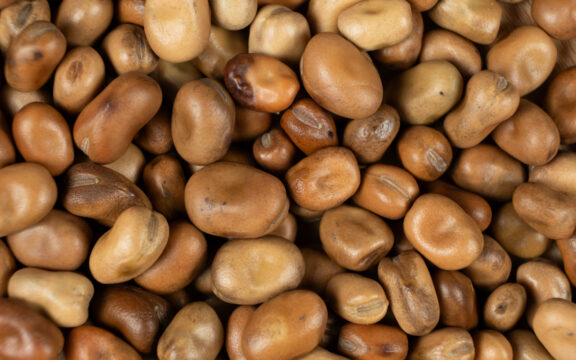
ECONEXT – Enabling protein CONcentrates for EXTrusion
ECONEXT paves the way for a sustainable shift in protein production—one that’s not just better for the planet, but also economically viable and locally rooted.
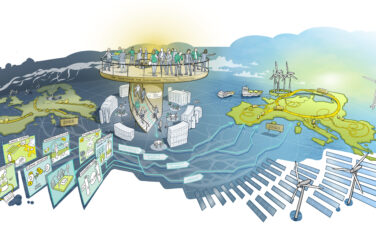
The road towards a circular, climate-neutral and resilient 2050
What does the future demand from us – and from industry? Our new visual shows how ISPT navigates the path towards a circular and CO₂-neutral economy by 2050.
ISPT brengt systeeminnovatie naar Rotterdam Processing Week 2025
ISPT presenteert tijdens de Rotterdam Processing Week de laatste inzichten en innovaties rondom energie, materialen en voedselverwerking.

Anomalous enhanced swelling of charged copolymer gels
Highlights Abstract Copolymer gels are a class of hydrogels that possess at least two different monomers within the same polymer chain. A common method for synthesizing copolymer gels is the...
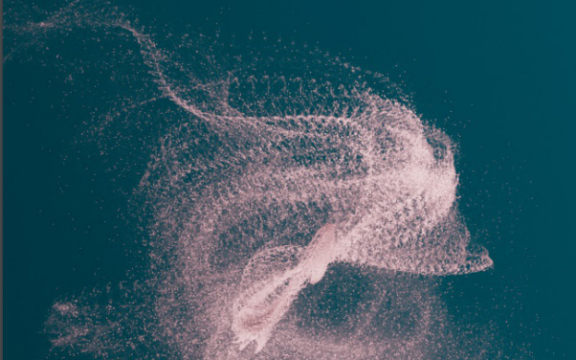
From mist to matter: Steering particle structure development during pilot-scale spray drying
Spray drying is a widely applied method for producing shelf-life stable powders such as food ingredients. During drying, a liquid feed is atomized into small droplets and exposed to hot...
2024 achievements: energy-efficient drying technologies for the food industry
Reflect with us on the achievements of 2024 and see what opportunities lie ahead for the food industry in 2025.
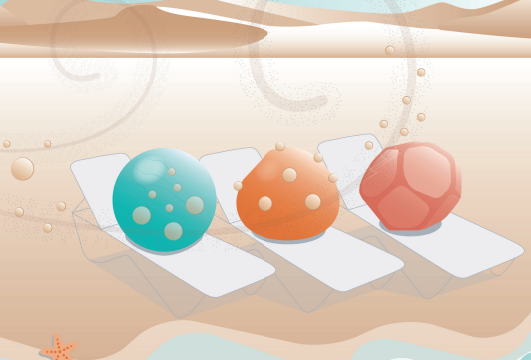
Single droplet drying to steer particle agglomeration during spray drying
Large scale food processes allow mass-production of well-preservable food materials, such as powders produced by spray drying. However, the food industry is consuming a lot of energy, and drying is...
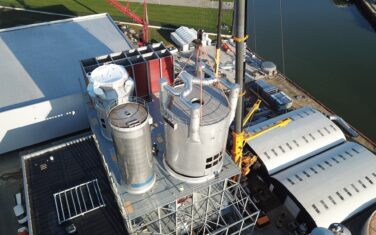
Zeolietsorptiedroger realiseert 40-45% energiebesparing bij sproeidrogen
Recentelijk heeft ISPT de haalbaarheidsstudie ZeoDry afgerond, waarin de efficiëntie van een nieuw ontworpen zeolietsorptiedroger in een drumconstructie werd onderzocht. Uit de studie blijkt dat een energiebesparing van 40 à...
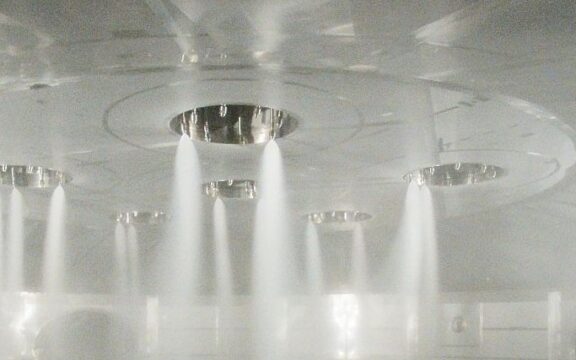
Completed
MilDeWat – Breakthrough Mild Dewatering Technologies
This project will enhance the implementation of mild (energy extensive) dewatering technologies to contribute to industry's energy reduction goals.
Liquid-Gas Interface Deformations in Atomization
The simulation studies performed in this work represent a stepping stone towards the use of LFRM in the simulation of spray systems present in spray drying applications.

External event
Eurodrying 2025 Conference – NWGD
ISPT is sponsor of the EuroDrying Conference. We will have the opportunity to present the Drying & Dewatering and Mild Fractionation For Food projects at our own stand.