
Asymmetric Bias Effects of Polyelectrolyte Brushes: A Systematic Electrochemical Impedance Spectroscopy Study
Polyelectrolyte brushes are promising surface modifications, and it is known that their properties are affected by environmental conditions
How Cross-Linking Influences the Electrochemical Properties for Brush-Functionalized Electrodes
Hydrogel brushes comprise cross-linked polymer chains that are attached at one end to a substrate. Their networkarchitecture promotes electrochemical stability, which renders these materials suitable for electrochemical applications. However, the...
Electric and Solvent Stability of Polymer Brushes Are Dictated by Different Design Principles
In this study, we compared the solvent and electro-stability of different polymer brushes and brush-anchor combinations.
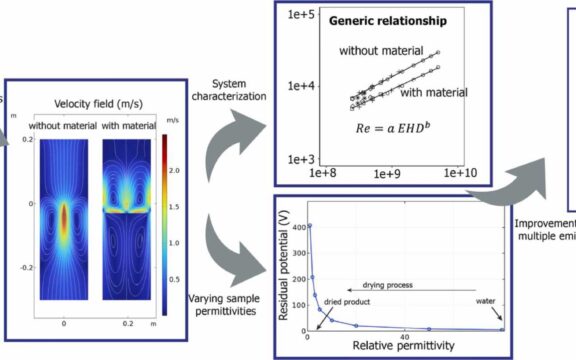
Multiphysics modeling of corona wind generation for electrohydrodynamic (EHD) drying of thin films
We present a multiphysics model to simulate corona wind generation during EHD drying of thin films.
Whitepaper: Water Availability for Food Production under Pressure
On 21st of April 2026, the ISPT Drying and Dewatering Program hosted a brainstorming session at its office in Amersfoort. The insights are captured in this whitepaper
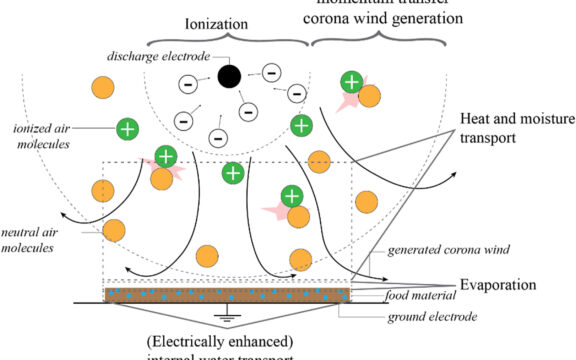
Material property changes during electro-hydrodynamic drying (EHD): a closer look into the falling rate period
Electrohydrodynamic (EHD) drying offers an alternative to hot air drying thanks to its lower energy use and lower operating temperatures. EHD drying benefits from enhanced convection induced by the corona...
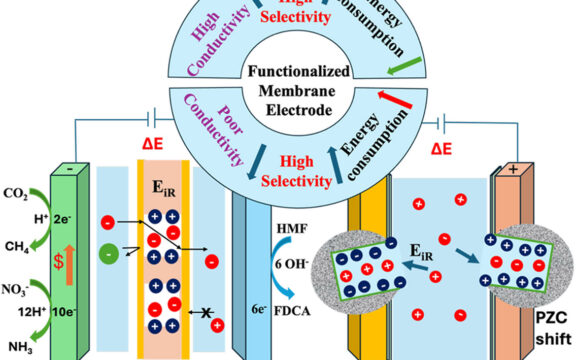
Critical evaluation of factors influencing the specific energy consumption of electrically driven membrane separation technologies
Electrodialysis (ED) and capacitive deionization (CDI) are electrically driven separation technologies with strong potential to advance renewable and sustainable goals, as they can be powered by renewable electricity, while enabling...
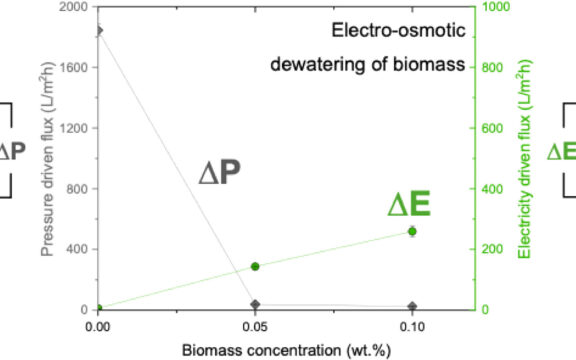
Electro-osmotic membrane dewatering of biomass: influence of membrane morphology, surface charge and process parameters
Formation of the EDL at a negatively charged surface (red) and its electromigration under an applied electric field resulting in the slip of adjacent water layers, known as electro-osmotic flow.

Anomalous enhanced swelling of charged copolymer gels
Highlights Abstract Copolymer gels are a class of hydrogels that possess at least two different monomers within the same polymer chain. A common method for synthesizing copolymer gels is the...

From mist to matter: Steering particle structure development during pilot-scale spray drying
Spray drying is a widely applied method for producing shelf-life stable powders such as food ingredients. During drying, a liquid feed is atomized into small droplets and exposed to hot...
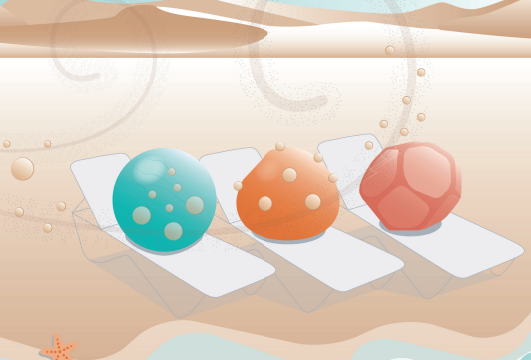
Single droplet drying to steer particle agglomeration during spray drying
Large scale food processes allow mass-production of well-preservable food materials, such as powders produced by spray drying. However, the food industry is consuming a lot of energy, and drying is...
Liquid-Gas Interface Deformations in Atomization
The simulation studies performed in this work represent a stepping stone towards the use of LFRM in the simulation of spray systems present in spray drying applications.
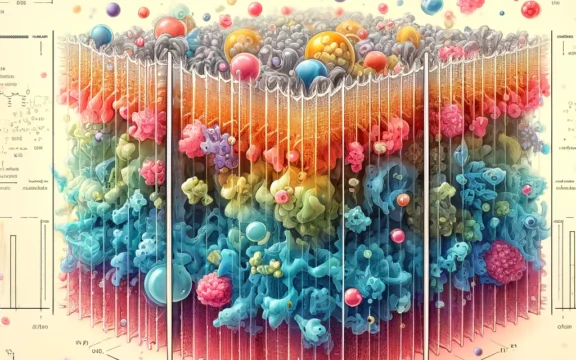
Protein transport in open ultrafiltration
This thesis aims to quantify the mass transfer of proteins through a membrane and understand which driving forces in the system are responsible for protein–protein separation with ultrafiltration (UF).

Advances in Membrane Separation for Biomaterial Dewatering
Dewatering by membrane separation is a sustainable and efficient alternative for drying biomaterials.

Functionality-driven food formulation
This research proposes a method to create ingredient formulations based on their functional properties rather than of what they are composed.

Metabolomics and sensory studies to uncover asparagus flavour
Mass spectrometry (MS) – based techniques were used to investigate the metabolome of raw, cooked and processed asparagus materials.
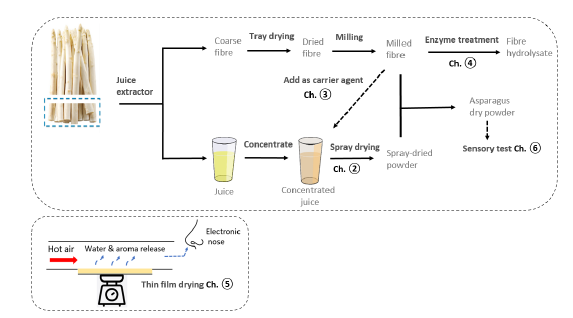
Spray drying of asparagus waste into flavour-rich ingredients
The residual flow of white asparagus is very suitable for spray-drying into powder.
Pea fractionation into functional ingredients
In this thesis, the process of yellow pea from structured seed to structured product is investigated.
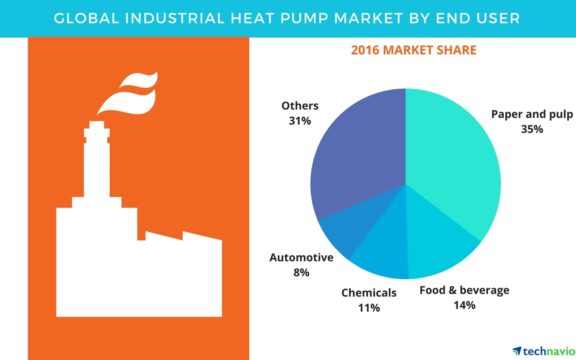
PINcHED – Process Integrated Heat Pump Drying
The PINcHED project investigates the heat pump process integration for 2 typical drying processes: Convective drying (Huhtamaki use case) and Contact drying (Cosun/Rixona and AVEBE use cases).