
Individual companies cannot make the transition to circularity on their own. ‘We are seeing a shift from innovation within a factory gate to innovation through collaboration between companies, supply chains and sectors,’ explain Tjeerd Jongsma and Irene ten Dam from ISPT, which is celebrating its twentieth anniversary this year. ‘Trust between people forms the base line; only then can innovation flourish.’
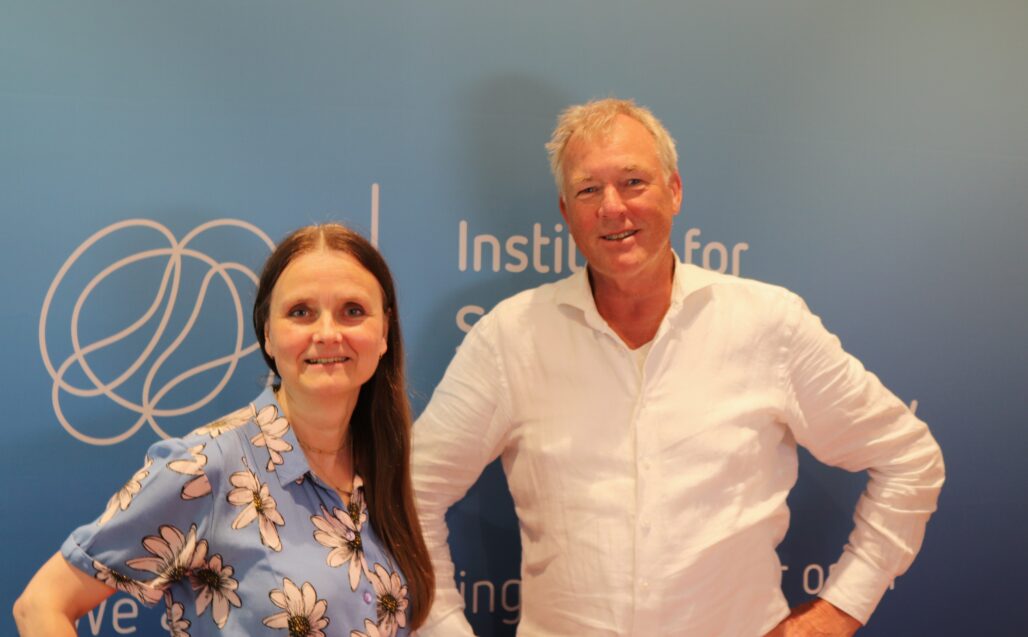
Twenty years ago, ISPT began with a straightforward remit: to bring companies together around process technology. Since then, the challenges have become much greater and more socially oriented. Whereas innovations used to take place mainly within companies, Jongsma says they are increasingly emerging at the interfaces between companies.
‘What is feedstock for one company is waste for another,’ says the director of ISPT. ‘That means a completely different dynamic in terms of how you manage raw materials and how you coordinate processes.’
According to him, this is also where ISPT’s most important role lies. ‘For the circular economy and the implementation of sustainable raw materials or energy, a company has become increasingly dependent on parties in the value chain. And it is precisely in connecting these parties that we now play a huge role.’
Circular raw materials roundabout
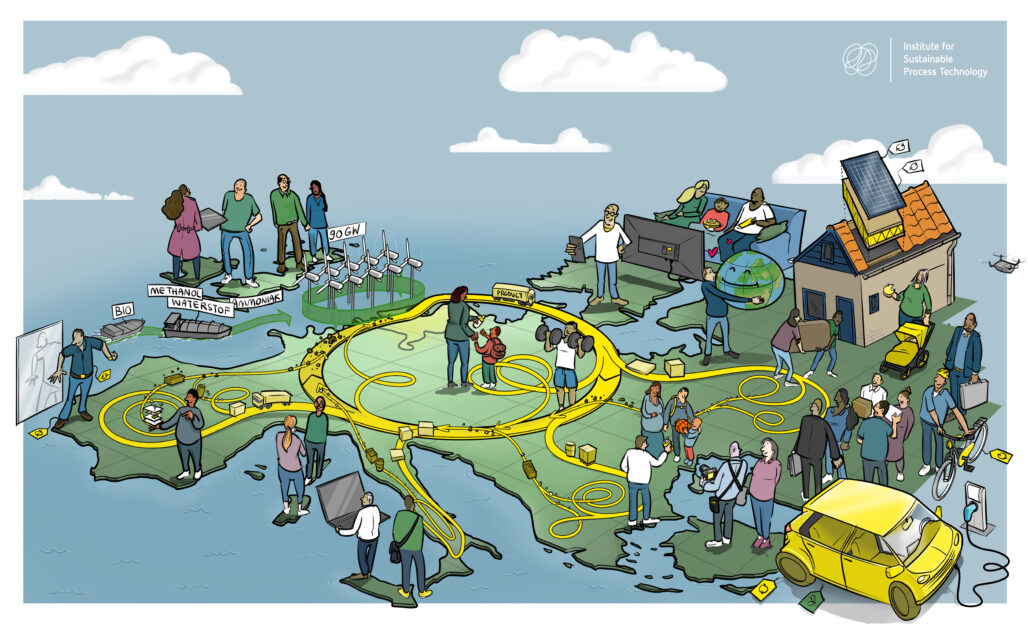
ISPT is working with partners to develop the vision for a circular raw materials roundabout in North-West Europe. The idea behind this is that, thanks to its ports, integrated industrial clusters, infrastructure and access to wind energy, the ARRRA region can play a central role in the circular economy.
‘We are in a position where we have effectively organised both the supply of raw materials and the supply of energy,’ says Jongsma. ‘This means we can continue to play a key role for Europe in the future.’
According to ISPT programme manager and strategist Irene ten Dam, this is not just about industrial policy, but also about prosperity, well-being, safety and sustainability. ‘So that people retain control over their essential everyday products, innovative materials and energy sources, and there are meaningful jobs close to home.’
A key prerequisite is sufficient renewable energy. ‘At present, producing recycled plastic requires three times as much energy as producing virgin material,’ says Jongsma. ‘If you don’t have access to relatively large quantities of renewable energy, it’s impossible to recycle more than 70 per cent of plastic.’
Competitors around the same table
According to Jongsma, ISPT sets itself apart by bringing together companies that would not normally seek each other out. One example is the Steel2Chemicals project, in which Tata Steel and ArcelorMittal collaborated on upgrading carbon monoxide from their process gases. That stream is currently often incinerated, whereas, according to ISPT, it can be turned into valuable raw materials.
‘From the perspective of a circular economy, these waste streams are extremely valuable,’ says Jongsma. ‘But neither company had the expertise to chemically process that stream into a valuable product themselves.’
ISPT therefore brought steel and chemical companies together. Ultimately, it proved possible to purify the carbon monoxide streams sufficiently for further processing. ‘In the steel industry, half the periodic table is found in the waste streams,’ explains Jongsma. ‘You really have to clean it thoroughly. We succeeded in doing that, and that is now providing momentum for the next steps.’
Competitors such as Shell and Dow were also brought together around one table via ISPT to develop electric cracking. ‘Although they are competitors and would normally refuse to discuss anything with one another, this was a development where they could work together,’ says Jongsma. ‘That way, we were able to bring them together and let the technical experts collaborate on a technical solution, rather than, for example, having corporate affairs teams sitting around the table, where all sorts of market dynamics come into play.’
From knowledge sharing to faster implementation
According to Ten Dam, collaboration is all about accelerating innovation in practice. She explains that, within projects, companies typically progress through several stages on the Technology Readiness Level (TRL) ladder. ‘They then regularly take the next steps towards market launch as part of a new consortium.’
Jongsma points out that the main benefits lie in new technology development and the sharing of practical experience. Companies implementing, for example, heat pumps, drying technology or new separation techniques learn from one another about the obstacles they encounter along the way.
‘Normally, you get that knowledge from your supplier. Now you get it from someone else who has already worked with that supplier. That’s a big difference,’ he says. ‘As a result, companies can implement solutions more quickly and minimise risks.’
You can draw up all sorts of contracts, but ultimately innovation arises from trust between people.
Tjeerd Jongsma
Pollution as a major challenge
Looking ahead to the coming years, ISPT sees the main challenges in the use of circular and bio-based raw materials. Unlike fossil-based raw materials, these vary greatly in origin, composition and quality. Ten Dam: ‘When switching from fossil-based feedstock to bio-based or circular feedstock, impurities – and therefore ensuring sufficient purity – are the biggest challenges.’
In her view, this issue is often underestimated. ‘Fossil oil is a homogeneous stream and its application has been optimised over decades. Decarbonisation is a highly complex and enormous undertaking.’
That is why, according to ISPT, research and development remain crucial – to develop new technologies and adapt existing ones to new raw material streams. After twenty years, ISPT still regards collaboration as the key factor for success in this regard.
The institute works with more than 150 industrial partners and acts as a network in which companies share knowledge and experience. ‘You first need to establish a common language, understand each other’s interests and challenges, and then you can arrive at a shared vision and objectives,’ says Jongsma.
According to him, this starts with trust. ‘You can draw up all sorts of contracts, but ultimately innovation arises from trust between people.’
The original brand story in Dutch is published at Industrielinqs.