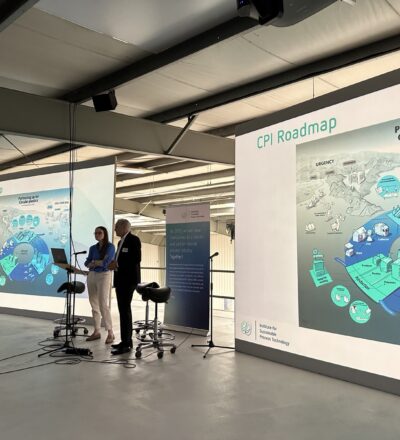
On 28 May, we hosted two complementary sessions on the future of carbon feedstocks. Together, they highlighted a clear direction: better sorting and smarter conversion must go hand in hand to provide the right input for a new circular industrial ecosystem. On 9 September, ISPT brings both lines together in working sessions.
From waste to value: feedstock transition
For both sessions, we collaborated with VNCI, Energy Innovation NL, ChemistryNL and the Ministry of Infrastructure and Water Management.
In the first session, partners presented results from running or finalized ISPT projects that explored the shift from fossil to carbon-rich waste streams as feedstock. These streams are complex, heterogeneous (or variable composition) and often contaminated. This makes conversion into materials challenging. The results of the projects show a pallet of new knowledge, insights and technologies. And the development of new technologies, when organized (or embedded) in a value chain approach and with committed partners, gives the highest chance of success towards new sustainable value chains.
Gasification route
Complementary to other routes, gasification was highlighted as a key route. Gasification will be used for feedstock streams that cannot be processed with, for example, mechanical or chemical recycling. Whilst gasification can handle low-quality waste and convert it into clean syngas. This creates a flexible intermediate for further use.
Syngas can then be converted into methanol and, via Methanol-to-Olefins (MtO), into key chemicals such as ethylene and propylene. This route offers a realistic way to defossilize parts of the chemical industry while building on existing assets. At the same time, it requires smart choices. Carbon, in the form of syngas, should be used where it adds the most value, in a balance between materials and energy.
The key takeaway is that the main challenge lies not in technology, but in system integration and building a viable business case. Unclear regulatory frameworks are seen as (one of) the most critical barriers.
Smart sorting with AI
During the second session, the role of Artificial Intelligence (AI) in sorting and pretreatment took centre stage. AI is already improving the effectivity of existing sorting lines. Vision AI can recognize and classify materials in mixed streams. Looking ahead, Vision AI could become the main identification step when combined with product data, such as a Digital Product Passport (DPP).
Visual identification of a product, when combined with background data on how this product can occur in a sorting stream, together with information on the composition of this product from the DPP, will enable very effective sorting. Developments in this domain are going very fast and may hold the promise of increased yield and reduced contamination.
Invitation – from insight to action
On 9 September, ISPT will host interactive working sessions. These sessions will focus on gasification and syngas value chains, as well as AI-driven sorting and pretreatment. Together with partners and participants, we will:
- Identify concrete innovation needs
- Develop these into new project opportunities
- Explore implementation in industrial practice
These sessions are co-created with partners to ensure strong relevance and impact.
Location
At the ISPT office, Groen van Prinstererlaan 37, 3818JN Amersfoort
Time
13:00 – 17:00 hr
Join us and actively shape the sustainable carbon transition. Sign up and take part on 9 September.
Also interesting to read
More information on the outcomes of both sessions you can read via de links below.