The PROVE IT project has delivered early insights into the role of CO₂‑based methanol in future carbon value chains. Its results strengthen the technological and systemic foundations needed to scale sustainable methanol production in the Netherlands.
Understanding Future Carbon Value Chains
The PROVE IT project – Products of Value from various CO2 sources, Enabled by Integrating Technologies – explored how CO2 can be transformed into valuable products, with methanol as a central case. Led by ISPT and supported under the MOOI 2020 programme, the project provides practical knowledge about the efficient reuse of carbon under the current circumstances.
A key achievement is the development of the first comprehensive carbon flow map of the Netherlands. Created in consultation with CBS, the map shows how carbon currently moves through the Dutch economy and how these flows may shift towards 2050. This work provides a systemic basis for policy and industry decisions and has been published academically.
Advancing CO₂‑to‑Methanol Technology
A major part of the project focused on validating catalyst performance for CO2‑based methanol production. Long‑term experiments demonstrated that a modern Clariant catalyst significantly outperforms older references in activity and stability. The research also confirmed that water co‑feeding accelerates catalyst deactivation, highlighting the importance of efficient gas drying in industrial processes.
Using extensive experimental data, the team developed a robust 40‑parameter kinetic model incorporating methanol autocatalysis and multiple side reactions. This model resolves limitations found in older models and enables accurate reactor design, lifetime prediction, and process optimization.
Feasibility of E‑Methanol at Twence
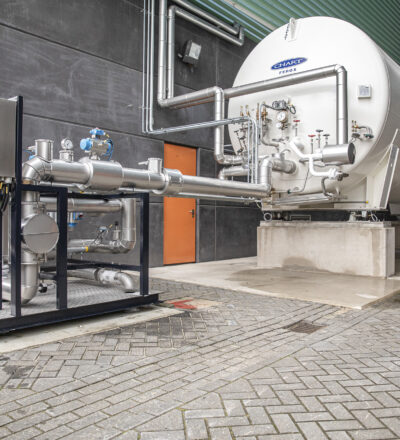
The consortium also examined the feasibility of producing e‑methanol using liquid CO2 from Twence. The conceptual design, including P&IDs and a techno‑economic analysis, shows that e‑methanol production is technically viable. However, current electricity prices and electrolyser CAPEX make the business case uncompetitive compared to fossil‑based methanol. Additional support mechanisms such as tax incentives, subsidies, or ETS credits are therefore essential.
Strengthening the Path to a Sustainable Industry
PROVE IT aligns strongly with the MOOI goals by contributing to the development of climate‑neutral and circular technologies. The insights gained – from system‑level carbon flows to catalyst performance and economic feasibility – provide industry and policymakers with actionable knowledge to accelerate the transition to a sustainable carbon economy.
Acknowledgement
This project is co-funded with subsidy from the Topsector Energy by the Ministry of Economic Affairs and Climate Policy