
Water availability, use and discharges are set to limit the processing industry by 2030. For the Food Industry, drought risks, limited water availability, and strict discharge requirements, make water circularity a strategic priority as the impact of water shortages or depletion will be huge. The ISPT Drying & Dewatering Program Day (April 21, 2026) focused on optimizing industrial water use under increasing scarcity, stricter regulations, and climate pressures.
Importance of water in the process industry
Water is extremely important in the process industry. Without reliable water availability, process steps quickly come to a standstill. This can cause production interruptions, quality issues and additional costs. This makes water not just a utility, but a critical process asset, particularly for water‑intensive sectors such as the food industry.
Increasing water demand in food production
The food industry is particularly vulnerable to water scarcity, as water is needed throughout the entire production process. Insufficient access to demi water immediately affects production, hygiene, energy transfer and product quality. At the same time, production of plant-based proteins and fermentation-based processes will demand a three times higher water consumption. Although technologies for recirculation of process water are available, regulatory constraints, safety considerations and limited urgency within organizations continue to slow progress.

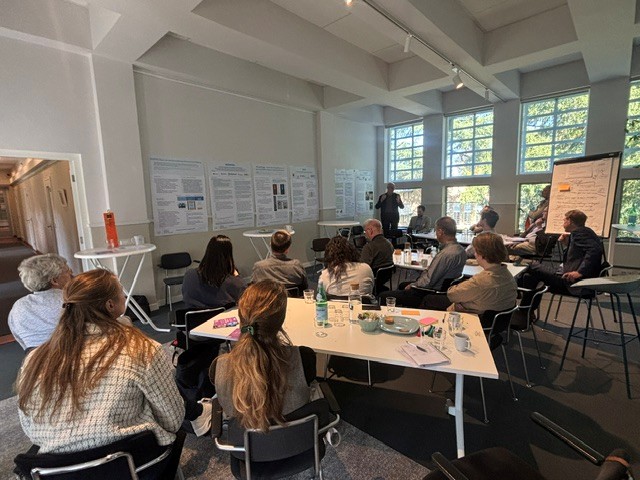
A multi-stakeholder event
On April 21, the ISPT Drying and Dewatering program therefore brought together food industry partners, knowledge institutes and technology providers in a multi-stakeholder event. The focus was on identifying bottlenecks, opportunities, potential solutions and technology needs related to the water availability challenge in the food processing industry. The shared insights are captured in a whitepaper that provides concrete starting points for addressing these challenges.
Water should become a strategic priority
This paper emphasizes that water circularity must become a strategic priority: where water is no longer viewed as a commodity but rather a critical asset. By explicitly addressing the potential impacts of water scarcity, the paper highlights the need for collaboration across value chains. Such collaboration is essential to develop and implement industry cases that prepare the food industry for water circularity in dewatering and drying processes.
Rethink water usage, start collaborating
Making process water circular and reducing effluent loads requires companies to fundamentally rethink how water is used in their industrial processes. Reducing water consumption, improving reuse, and developing circular treatment systems will be part of the innovation needs.
During the multi‑stakeholder event, participants identified several concrete actions, including:
- industrial symbiosis, where companies utilize each other’s (valuable) effluent streams
- process redesign, use of less chemicals for dewatering or water-only processing
- true water pricing, to understand the true impact of water shortages or depletion
- and targeted pilot projects to build practical experience.
Achieving a secure regional water supply, preventing water stress and making water in food processing circular requires close collaboration between all water stakeholders, including industry, knowledge institutes, technology providers and authorities. Aligning innovation with regulation is crucial in this transition.
Read more about potential solutions, innovation needs and concrete project proposals in this whitepaper.