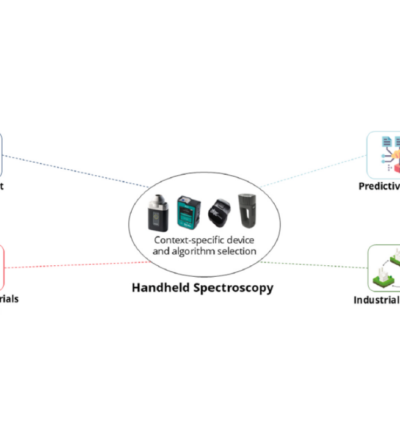
In this study, the researchers of Fingerprint 2 Footprint explored how handheld spectroscopy combined with chemometrics can support the procurement of end-of-life para-aramid materials for recycling. They compared multiple handheld NIR and Raman devices and evaluated their ability to classify material quality and predict para-aramid content, while also considering the potential economic and environmental implications of spectroscopy-assisted procurement.
Abstract
Reliable quality assessment of End-of-Life (EoL) materials remains a bottleneck in operationalizing the circular economy. The heterogeneity of EoL materials, limited traceability, and inadequate sensing technologies at collection points create inefficiencies that undermine the entire value chain. Handheld near-infrared (NIR) and Raman spectroscopy offer a promising route toward real-time, non-destructive material analysis. However, lower precision and high sensitivity to environmental
variation hinder practical implementation. This study introduces a dual-perspective decision framework that integrates handheld spectroscopy with chemometrics to guide circular procurement. By linking material composition to value from the seller’s perspective and acceptability thresholds from the buyer’s perspective, the framework enables quantitative, evidence-based decision-making at the point of collection. Using EoL para-aramid materials as a proof of concept, four handheld
spectrophotometers (Trinamix, Neospectra, Tellspec, and Mira) were benchmarked across multiple quality thresholds. Spectral data were used to develop classification models for the buyer perspective and regression models for the seller perspective, while environmental and economic assessments quantified the broader impact of handheld screening. Trinamix emerged as the optimal device, achieving 100% balanced accuracy at the 92% para-aramid threshold and the lowest root mean square error of prediction (RMSEP) of 0.56% with support vector regression. By redefining EoL materials screening from a constraint into a data-driven analytical process, handheld spectroscopy delivers measurable environmental and financial benefits and advances the transition toward low-carbon circular systems.
Download your free copy
Our publications are free to access. Simply provide your first name and email address to download.