In this project we accelerate recycling of high‑quality engineering plastics from cars and electronic equipment.
In short:
- RePlaCE develops improved sorting, purification, and compounding technologies.
- The project pilots full circular value chains for high-quality engineering plastics.
- A predictive model and techno‑economic assessment support future scaling.
Automotive lags behind in plastic recycling
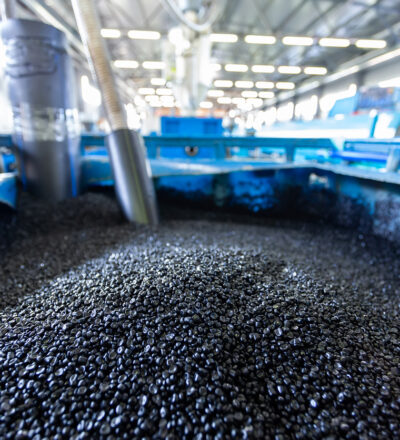
Cars and electronic equipment contain many types of engineering plastics, and most of these plastics are black. Today, only a small part of these plastics is recycled into high‑value applications because NIR sorting is not effective.
In the automotive sector, plastic recycling lags far behind metal recycling: only 15% of plastics are recovered, compared to 90–95% for metals. Meanwhile, Dutch and European regulations – including the revised ELV Directive, the WEEE Directive, and the Dutch Circulaire Materialen Plan – demand higher recycling rates.
Current recycling practices cannot meet these requirements. Key challenges include:
- mixed and heterogeneous plastic waste streams, especially black plastics,
- the presence of flame retardants, fillers, colourants and other additives,
- insufficient sorting and limited purification technologies.
To move towards circular value chains, the sector needs reliable sorting, smarter purification, and predictable quality of recycled materials.
About the project
RePlaCE aims to improve the quality of recycled plastics from WEEE and Automotive waste. The project covers the entire value chain: collection, sorting, analysis, purification, compounding, and testing of final products.
Key elements of the approach:
Material purification and compounding
The project starts with a comprehensive analysis of collected plastics, identifying polymer composition and the presence of flame retardants, fillers, additives, and colourants. Based on these findings, specific materials (such as PA, PC, ABS) are selected for WEEE and Automotive use cases.
Selected plastics are purified using newly developed material‑specific dissolution technologies. The purified plastics are analysed and compounded using stabilizers, compatibilizers and virgin polymers to achieve defined recycled content. Moulded parts are then tested, including stability and ageing performance. This process is validated at both lab scale and pilot scale.
Advanced identification technologies
We will develop new identification tools for heterogeneous — especially black — plastics:
- lab‑scale THz Raman and DUV Raman,
- pilot‑scale MIR, THz Raman and DUV Raman.
These tools enable more accurate sorting of black plastics.
Predictive modelling
The project will develop a predictive model to determine the most effective recycling pathway for a specific shredded or sorted plastic stream. The model assesses:
- feedstock quality,
- required compounding steps,
- compatibility needs,
- expected material stability over multiple lifecycles
Techno‑economic assessment
For each selected material and value chain (WEEE and Automotive), a techno‑economic assessment identifies the feasibility and commercial potential of scaling the technologies.
Expected results
The project delivers:
- A clear overview of available feedstock for recycled engineering plastics in WEEE and Automotive streams.
- New identification and sorting technologies for black plastics.
- Reduced SVHC content in selected plastics through targeted dissolution and compounding.
- A validated predictive model that recommends optimal recycling routes based on:
- feedstock quality,
- compounding requirements,
- material stability and ageing behaviour.
- Techno‑economic assessments for circular value chains in both WEEE and Automotive sectors.
Together, these outcomes lay the foundation for scalable, high‑quality recycling of engineering plastics.
You might also be interested in
Let’s get in touch
Ronald Korstanje

Marta Konopinska
Acknowledgement & partners
This project is co-funded with subsidy from the Dutch Enterprise Agency and the Ministry of Economic Affairs within the context of the Circular Plastics NL Growth Fund.