The e-Missi0n MOOI project successfully developed and demonstrated electric furnace technology for
steam cracking, offering a promising pathway to decarbonize ethylene production. This collaborative
initiative between Shell, Dow, TNO, and ISPT investigated two electrification approaches: retrofitting existing furnaces with electric heating elements and developing novel reactor designs.
In short:
- In the current steam cracking process fossil fuels are used to achieve high temperatures
- Emissions for cracking are 5 million ton CO2 per year
- Out of which our industrial partners Shell and Dow emit 68%
- Therefor we need to electrify this process (e-cracking)
E-cracking can reach an emission free process
Currently, the production of olefins in large-scale cracking furnaces is a prominent source of carbon emissions. Within the Netherlands alone, the emissions for cracking are 5 million ton CO2 per year, out of which our industrial partners Shell and Dow emit 68%. In the current steam cracking process, process derived gasses are incinerated to achieve the high temperatures that are required for the process.
Electricity from renewable sources is an alternative opportunity to heat this process. By heating the process with green electricity rather than fossil fuels, it is possible to reach an emission free process.
Activities in the MOOI-scheme
Within e-Missi0n MOOI the consortium worked together to research two different routes that lead to the electrification of the cracking process of olefins:
- 1) Brownfield route: Development of an e-furnace based on conventional box geometry where burners
are replaced by radiating elements using resistive heating - 2) Novel route: Development of an e-furnace based on a novel approach, in which the principles of
process intensification can be applied to significantly reduce the required capital and power intensity.
In addition to developing two different routes, the project aimed to optimise the heat integration of the furnace to minimise the required energy consumption. Alongside the electrification of the downstream separation train, minimising energy consumption is essential for providing a feasible business case for electrification.
Results
Key Technical Achievements
- Indirect Electrical Heating (IEH)
- Demonstrated that SiC heating elements can reach the required heat flux (80 kW/m²) and temperatures (1100 °C) for steam cracking.
- Cyclic testing revealed durability limitations due to resistance increases and mechanical degradation, making a 4‑year lifetime unlikely.
- Direct Electrical Heating (DEH)
- Validated the novel Joule‑heated hanging tube concept as highly promising for steam cracking.
- Laboratory and pre‑pilot tests showed stable operation at steam cracking conditions.
- CFD modeling confirmed performance comparable to conventional gas‑fired furnaces, with potential reductions in coking.
- Novel Reactor Design
- Narrow‑bore reactor concept demonstrated improved heat delivery and lower coking rates, compared to conventional systems for both naphtha and ethane cracking.
- Heat Integration
- Advanced molten salt systems have been developed to recover waste heat for feedstock preheating. This could enable complete heat reuse, as opposed to the 30% achieved with conventional steam systems.
Economic and Environmental Impact
- Techno-economic analysis shows e‑cracking becomes competitive at electricity prices below ~67 €/MWh or CO₂ costs exceeding ~235 €/ton.
- Electrifying one‑third of global cracking capacity could:
- Produce 59 Mt/year of ethylene, and
- Avoid 90 Mt/year of CO₂ emissions.
Technology Readiness and Outlook
- The project successfully de-risked multiple technology pathways and delivered an engineering package for pilot‑scale demonstration of the DEH concept.
- The comprehensive risk assessments and validated models are supporting scale‑up toward commercial deployment, contingent on:
- favorable electricity pricing,
- renewable energy infrastructure development, and
- economic valorization of methane-rich byproduct fuels.
The project contributes significantly to the global development of steam cracking electrification technology, with pathways identified for achieving industrial-scale decarbonization of ethylene production.
Also interesting to read
- Eerste stap richting elektrische kraker, VNCI 2021
- Dow and Shell start up electrified steam cracker unit, Chemical Engineering 2022
- Review of the molten salt technology and assessment of its potential to achieve an energy efficient heat management in a decarbonized chemical industry, de Figueiredo Luiz, D., Boon, J., Otero Rodriguez, G. & van Sint Annaland, M., 15 October 2024, In: Chemical Engineering Journal
- Het hoe, wat, waar en waarom van elektrificatie in de industrie, Change Inc. 2023
You might also be interested in
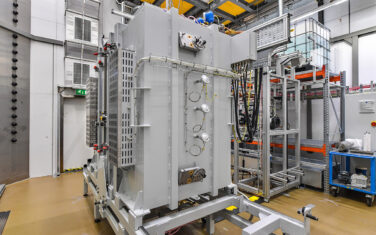
E-Missi0n: a key link in the development of emission-free e-furnace technology
‘We bouwen nieuwe waardeketens omdat de industrie dat nu nodig heeft’
Electrification requires adaptability and flexibility
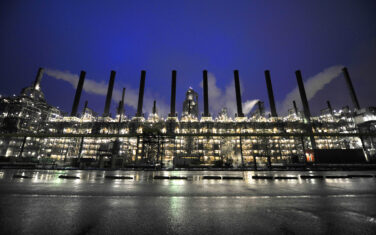
Shell and DOW start up e-cracking furnace experimental unit
Dow and Shell demonstrate progress for lower CO2 emission crackers
Articles / Publications
Acknowledgement & partners
This project is co-funded with subsidy from the Topsector Energy by the Ministry of Economic Affairs and Climate Policy.