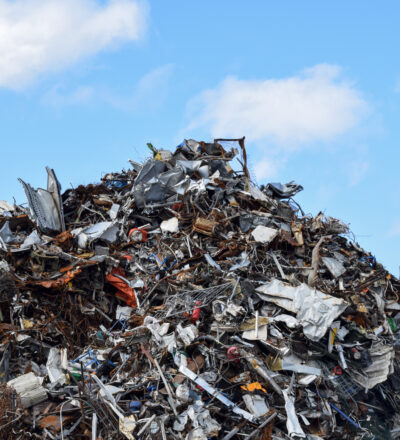
Despite ambitious European and Dutch recycling targets, the use of recycled plastics is lagging behind. In particular, the rules surrounding ‘end-of-waste’ (EoW) status appear to be a major hurdle on the path to a functioning market for recycled materials. To gain a better understanding of the opportunities and challenges surrounding EoW, research into plastics was carried out as part of the ReBBloCS project. The results not only provide guidance for the plastics sector but also offer valuable lessons for other material streams.
Identifying legal and market barriers
The upscaling of plastics recycling is often seen as a technical issue, but research by Tuyen Le, a Master’s student in Environment and Energy Management at the University of Twente, shows that legal and economic factors are at least as decisive. In her research, she focuses on identifying legal and market barriers to the integration of recycled plastics and exploring possible solutions from both a legislative and a business perspective. Although a product or packaging material may still be usable, it often ends up in the incinerator. That experience was a key motivation for her research into the barriers that are still holding back circular supply chains today: a system in which actors throughout the supply chain collaborate to close material loops through innovative recycling technologies and circular practices.

What is ‘end-of-waste’ status?
‘End-of-waste’ status (EoW) is the point at which a waste material legally becomes a product or raw material again. The current European Waste Framework Directive stipulates that Member States must take appropriate measures to ensure that waste is no longer considered waste if it meets a number of conditions: 1) it is intended for reuse, 2) there is a market for it, 3) it complies with technical requirements, and 4) it has no adverse effects on the environment or health.
At present, the system operates on the basis of voluntary certification, based on trust and certainty of supply and take-up between the supplier and the buyer. This begins with pooling experiences and clarifying the conditions for ‘end-of-waste’ status. Next, the supplier and buyer undertake a self-assessment in which responsibilities are set out. A quick scan is then carried out to assess the risks, and finally everything is consolidated into a certification and verified by a third party, for example through a certification scheme such as ISCC Plus.
No harmonised European approach to End-of-Waste status
One of the biggest bottlenecks is the lack of a harmonised European approach to End-of-Waste status. Although EU Member States operate under the same European framework, national rules and support mechanisms vary considerably. This creates uncertainty for recyclers and hinders cross-border trade in recycled plastics.
Furthermore, recyclers often have to demonstrate, on a batch-by-batch basis, that their material is safe and reliable. “If the EU applied a single standard across all countries, companies could simply present a certificate and would no longer have to prove everything all over again”, argues Tuyen Le. Without a recognised End-of-Waste status, recycled plastics remain legally classified as waste. “The competitive position of recycled plastics also remains vulnerable as long as virgin plastics are cheaper and legal obligations for recycled material remain limited. As a result, there is a lack of a strong commercial incentive to make the switch,” explains Tuyen Le.
Recyclers also bear high costs for certification, quality controls and investment in technology, whilst market demand does not yet offer sufficient certainty for large-scale expansion.
Greater certainty with European plastics legislation
To ensure greater certainty, work is underway at European level on a PPWR (Packaging and Packaging Waste Regulation), according to an article in het ‘Financieele Dagblad’. This European legislation sets out measures designed to ensure that packaging on the European market contains a minimum fixed percentage of recycled plastic. This initiative is intended to boost the production of recycled plastics. Clear, uniform European rules are therefore good news: this is what the circular economy relies on.
Market development
According to Tuyen Le, a European ‘end-of-waste’ standard, widely recognised certification schemes and stronger demand incentives could create important conditions for further market development. “If such a certification scheme was accepted by governments and authorities across the EU, it would help create a more harmonised market for recycled plastics. This is therefore a key recommendation for both national and European legislators,” advocates Tuyen Le.
The main lesson from Tuyen Le’s research is that circular raw materials do not automatically find their way onto the market. Technology is only one part of the whole picture. Regulation, certification, market demand and cooperation between supply chain partners appear to be at least as important.
From waste stream to chemical building block
This conclusion is also relevant to waste streams other than plastics. It is precisely this systems-based approach that lies at the heart of ISPT’s projects, for example the ReBBloCS project. This project is working on a new circular value chain in which complex and mixed waste streams are converted into valuable chemical building blocks. This involves not only the development of innovative conversion technologies, but also, and crucially, connecting all the links in the chain: waste processors, technology developers, research institutions, industry and legislators.
Do you have experience with the ‘end-of-waste’ classification for plastics or other material streams? Please share your insights with Otto Tobé, programme manager at ISPT, so that we can continue to identify the key challenges and potential solutions.
Acknowledgement
This project is co-funded with subsidy from the Topsector Energy by the Ministry of Economic Affairs and Climate Policy.