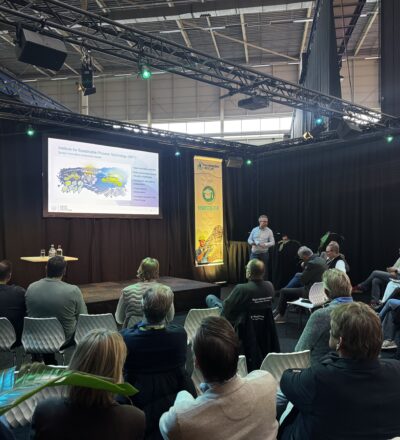
Smarter sorting technology alone will not make the plastics chain circular. The greatest gains lie in better linking material information, feedstock quality, recycling routes, end uses and economic interests. At the Waste Management & Recycling trade fair on 12 November, the Circular Plastics Initiative (CPI) demonstrated why this is precisely where the next step lies.
Technology for recognising and sorting plastic waste is developing rapidly. Thanks to AI, sensors and data analysis, material streams can be classified more accurately. Yet one key question often remains unanswered: What are we actually sorting for?
Smart sorting starts with the end use
Mechanical, chemical and thermochemical recycling each place different demands on the quality of their feedstock. That is why there is no single ‘best’ recycling route for plastic waste. Which route is most suitable depends on both the properties of the material and the application for which the recycled material is to be used. Mechanical and chemical recycling are not competitors in this regard, but complementary solutions within the same circular system.
The challenge lies in the supply chain
Although the technology is available, in practice it proves difficult to direct material flows towards the most valuable application.
Recyclers need investment certainty, producers need sufficient supplies of recycled material at competitive prices, and sorters need reliable markets. Consequently, the success of recycling is determined not only by technology, but also by the way in which the various links in the value chain fit together.
To direct the right materials to the right recycling route, insight into the quality and availability of feedstock is required. Furthermore, this calls for clear agreements on allocation and cascading, as well as economic conditions that support high-quality recycling.
AI and dynamic cascading models can help in this regard by bringing together information on material flows, quality and potential applications. In this way, materials can be more effectively matched to the processing method that yields the greatest circular value.
Standardisation as a foundation
A key prerequisite for this is the standardisation of feedstock analysis. As long as different parties use different methods for sampling, sample preparation and analysis, it will remain difficult to compare quality objectively. Shared agreements on quality measurements can contribute to a more transparent market and better utilisation of circular plastics.
Working together on the next step
The conclusion of the knowledge session was clear: the next breakthrough in plastics recycling lies not primarily in better sorting technology, but in better linking material information, feedstock quality, recycling routes, end-uses and economic incentives.
That is why ISPT, together with stakeholders from the value chain, is investigating how standardisation, supply chain management and data-driven decision-making can contribute to a more effective circular plastics system.
Are you working on sorting, recycling, feedstock, material applications, or analytical methods for plastics? We’d love to discuss the next steps toward a smarter and more connected circular system. Please contact the ISPT Circular Plastics Initiative.