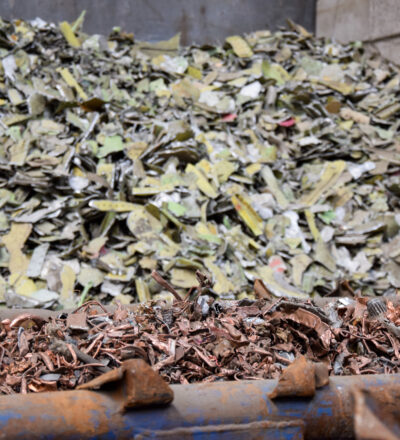
On 25 August, stakeholders from industry, knowledge institutes and public organisations came together to discuss the next steps for the National Technology Strategy (NTS) innovation programme on Critical Raw Materials (CRM). The meeting focused on the development of value chains for lithium, lithium recycling (or alternative materials), vanadium and manganese recovery from steel slags, germanium, neodymium and dysprosium recycling, and the recovery of silicon, copper and silver from end-of-life photovoltaic (PV) panels.
During the meeting, participants explored the technological, economic and regulatory challenges that need to be addressed to help position the Netherlands as a circular raw materials hub for Northwest Europe. Read all the insights below.
Technology development
A central conclusion was that many of the required processing technologies already exist. Hydrometallurgical and pyrometallurgical solutions are available, but further work is needed to adapt them to emerging waste streams and increasingly stringent environmental regulations. Participants emphasised that technology choices should be guided by the desired end products and the specifications of both feedstocks and residual streams. Practical learning, demonstration projects and knowledge exchange with organisations in the value chain were identified as key enablers for progress.
Connecting CRM ecosystems
The workshop also highlighted the importance of an integrated value chain perspective. Rather than developing individual material chains in isolation, participants stressed the potential of connecting different CRM ecosystems. Materials or by-products considered waste in one value chain could become valuable feedstocks in another, creating new opportunities for industrial symbiosis and more efficient use of infrastructure. A coordinated international approach could further strengthen the Netherlands’ position as a circular resource hub.
Creating value across CRM ecosystems
Participants identified a need for an overarching view of the material flows and value chains that are strategically important for the Netherlands and Europe. In the meantime, entrepeneurs keep building on their existing CRM valuecases (Wennink), for which we have also identified opportunities to strengthen a shared narrative and create stronger connections between value chains. The discussion also highlighted the importance of developing business models that create value for all actors in the chain and help retain multiple critical raw materials within Europe. Finally, participants explored how market adoption of recycled materials can be accelerated, including the role of quality specifications and risk sharing between suppliers and end users.
Development of a relevant knowledge cluster
Looking ahead, the development of knowledge, skills and long-term research programmes emerged as a recurring theme. Participants pointed to successful innovation ecosystems in fields such as organic chemistry and the revival of electrochemistry, both driven by ongoing research programmes and investments in talent development. These examples illustrate the value of clear long-term strategies, supported by targeted investments, strong business cases and a shared vision for the future. In addition, accelerating permitting procedures and exploring new funding opportunities were identified as important conditions for scaling circular CRM solutions.
Call to Action
The meeting demonstrated that technological innovation alone will not be enough. Real progress requires collaboration across industries, value chains and disciplines to address challenges ranging from feedstock security and market development to permitting and skills development.
Do you have ideas for strengthening the value chains for lithium, vanadium and manganese, germanium, neodymium and dysprosium, or the recovery of silicon, copper and silver from end-of-life PV panels etc.? Please get in touch.
ISPT will use the insights gathered to further shape the NTS innovation programme and identify opportunities for new collaborative projects. Together, we can continue building a Circular Raw Materials Roundabout for Northwest Europe.