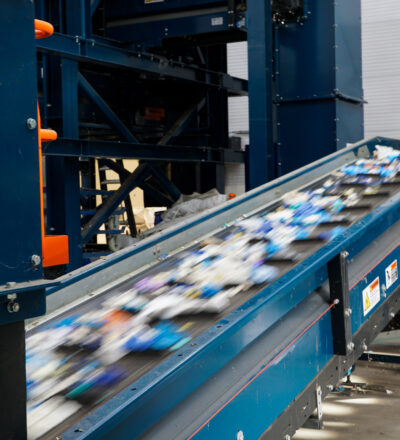
There are constant innovations in the field of waste separation. While these lead to incremental technological improvements, they almost never offer a new perspective on waste separation. The Multipurpose Plastic Sorting (MPPS) project demonstrates that such innovative approaches are possible.
A new approach to mechanical sorting
In current sorting facilities, the overall process is focused on achieving the highest throughput. As a result, it is often not possible to produce the high-quality streams required for advanced recycling or specialised applications. The Multipurpose Plastic Sorting (MPPS) project investigated how cross‑sector innovations could improve the accuracy, flexibility and specificity of plastic sorting for end-use applications.
To this end, the project borrowed existing technologies from other domains, such as multi-fraction sorting, robotic waste sorting, and anomaly detection.
Collaboration across the value chain
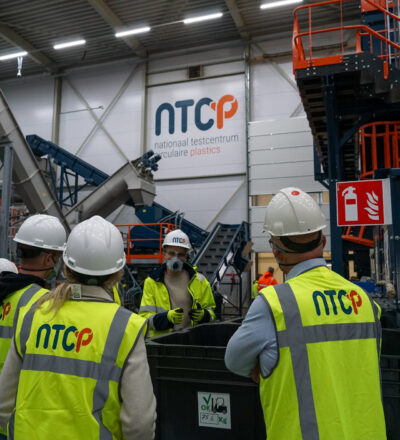
For over two years, ISPT, the applied research centre NTCP, Omrin, Danone, Sabic and Midwaste collaborated on a single, overarching objective, divided into three diverse industrial use cases. These ranged from household packaging to non‑specific hospital waste. Project leader Lieuwe Hendrik Lei (NTCP) said, “This enabled us to make progress in various areas regarding the sorting and characterisation of plastic waste. There was a pragmatic approach in showcasing prototypes at an early stage to a wide range of relevant stakeholders. This is unique and involved parties at an early stage of development.”
Some results have already led to a follow-up project.
Clear next steps
Each use case yielded concrete results and provided sufficient confirmation to continue with the chosen route of innovation. Lieuwe Hendrik Lei: “Some results have already led to a follow-up project; for others, an initiative is planned.”
By combining prototype development with an analysis of implementation and costs, the next steps are clearly indicated. In doing so, MPPS demonstrates how groundbreaking sorting technologies can significantly strengthen the circularity of plastics.
View all the results on the MPPS project page.
Acknowledgement
This project is co-funded with subsidy from the Topsector Energy by the Ministry of Economic Affairs and Climate Policy.