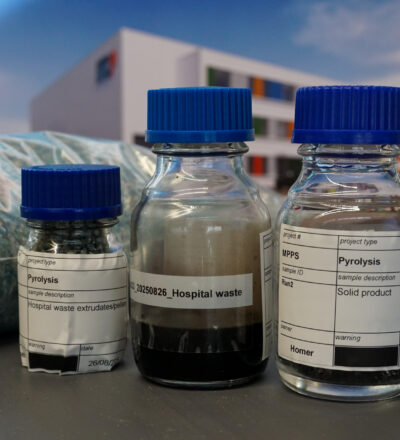
Every year, tons of hospital waste in the Netherlands are incinerated, even though a large share is technically recyclable. “For our hospital, this concerns 170 tons of specific hospital waste and 750 tons of non-specific waste, says Edwin van Stralen of UMC Utrecht. “That’s troubling, because we have sustainability goals, including circularity.”
To exploit the value of hospital waste, UMC Utrecht, SABIC and the applied research centre NTCP collaborated, under the guidance of the Institute for Sustainable Process Technology (ISPT), in the Multipurpose Plastic Sorting (MPPS) project. This project focuses on improving the efficiency and flexibility of plastic waste sorting by borrowing existing sorting technologies from other domains. In this specific case, the three parties investigated whether unsorted hospital waste can be made suitable for high‑quality recycling.
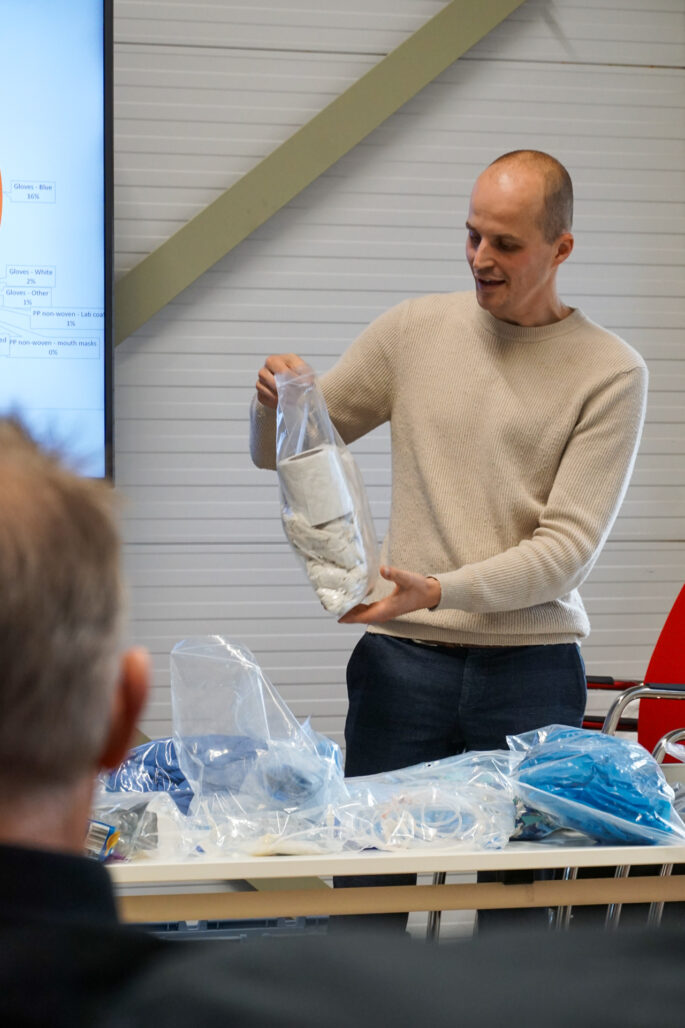
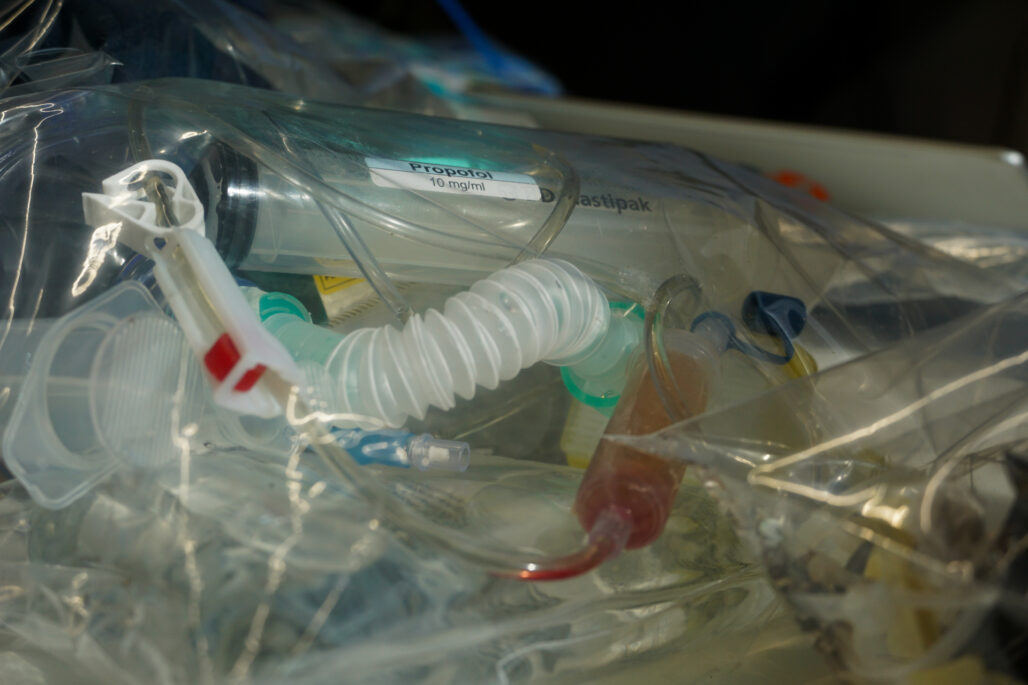

The challenge: plastic waste without a recycling route
Healthcare institutions rely heavily on single-use medical items, but a circular chain for these products is lacking. “Producers are not responsible for them, unlike plastic packaging, which are regulated under Verpact,” says Edwin van Stralen, team leader for Transport & Environmental Services at UMC Utrecht. “This means hospitals themselves must ensure sustainable processing of this waste, without a standard collection and sorting process in place.”
The design of medical products also plays a role. “They’re created for ease of use and patient safety, not for recyclability,” Edwin explains. “Designing for recycling is not yet standard practice.”
The experiment: sorting without source separation
Hans de Brouwer (Innovation Leader at SABIC): “We previously collaborated with UMC Utrecht on recycling selected items, such as non‑woven jackets. We were pleasantly surprised by the enthusiasm of the hospital staff and the energy they invested in source separation. The results were also good.” However, scaling up posed a challenge. “You don’t want to burden medical staff with waste sorting — their time is for patients,” Hans explains. “In this project, we therefore wanted to explore what automated sorting could deliver.”
Lieuwe Hendrik Lei (Project Leader at NTCP) adds: “We selected a waste stream that is currently mostly incinerated, but which does not need to be incinerated according to regulations. That led us to non‑specific hospital waste. To process this stream, we combined existing sorting technologies — shredding, sieving and optical sorting — to extract polyolefins (mainly polyethylene and polypropylene). The goal: a composition of more than 90% polyolefins, suitable for thermochemical recycling.”
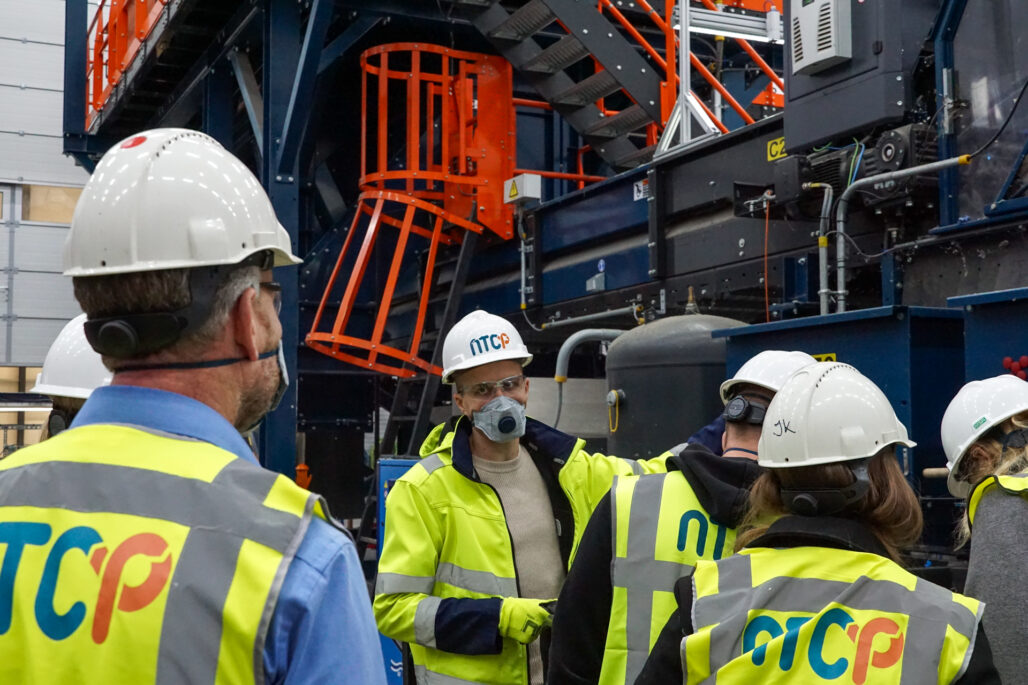
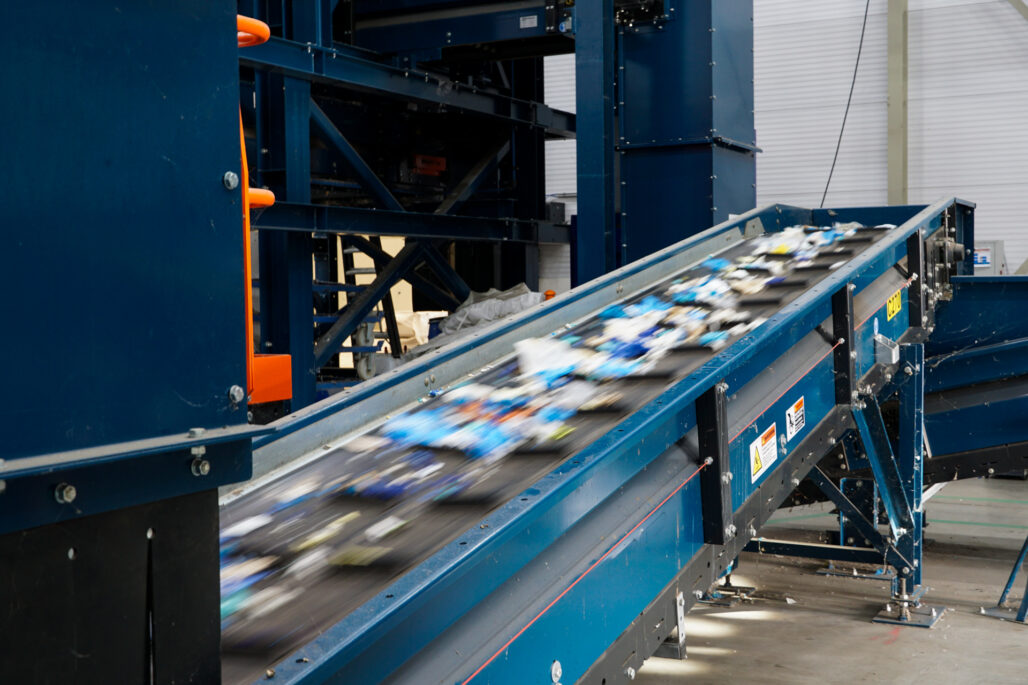
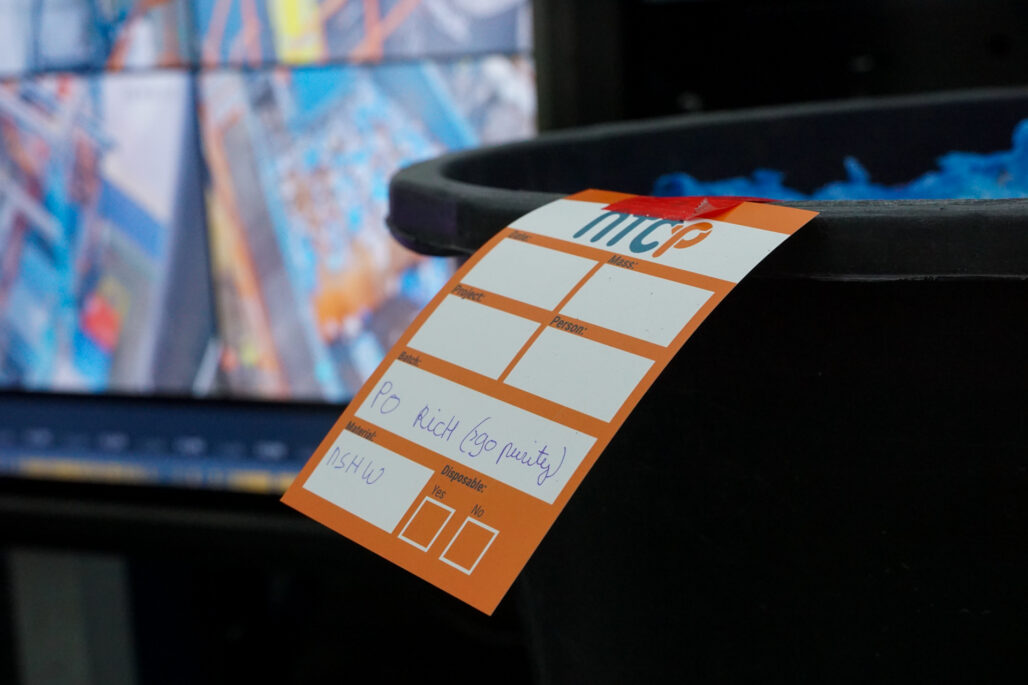
They succeeded: the team achieved the desired purity. But there are caveats. “You have to process four tons of waste to obtain one ton of suitable raw material,” says Noushin Hasanabadi (Project Leader at SABIC). “That makes it costly and complex.” Lieuwe Hendrik adds: “There is no viable business case yet.”
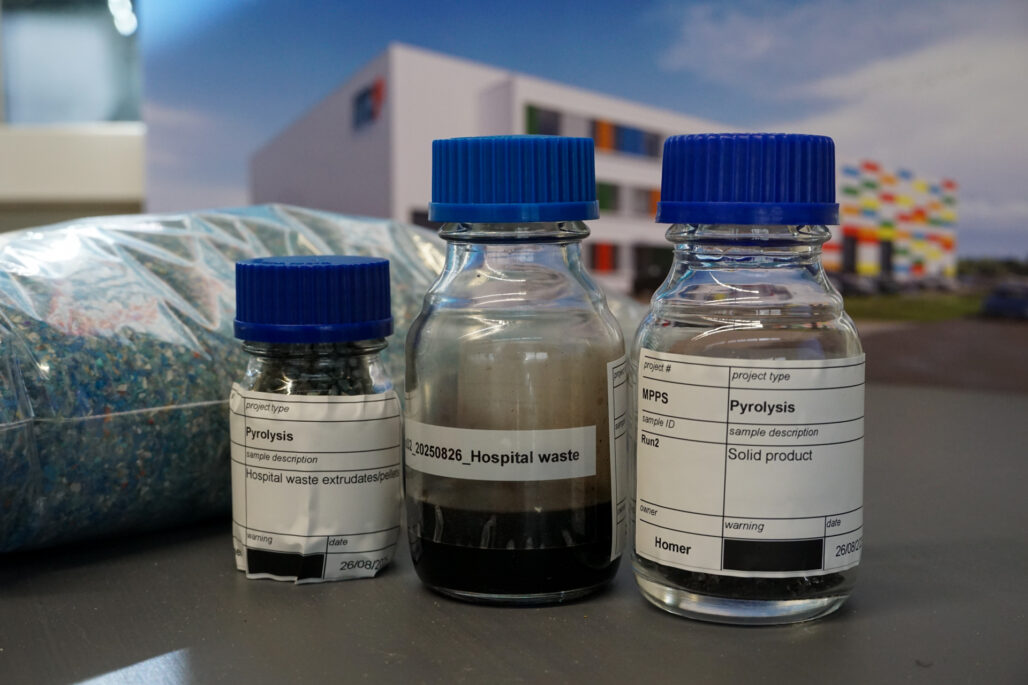
Enriched insights into waste streams
The project generated valuable insights. It turned out that 20–30% of non‑specific hospital waste is compositionally suitable for thermochemical recycling. However, the challenge lies in the shape of the products: large, lightweight items such as non‑woven jackets and films disrupt the sorting process because they can cause blockages. In addition, syringe tubes get tangled up in rotating parts. “You first need to adjust the size distribution to make the stream more homogeneous,” says Lieuwe Hendrik, “and only then sort by material type using, for example, near-infrared technology.”
An important step forward
Despite the costs, the parties involved see the project as an important step forward. “We have proven that it is technically possible. That expands our options,” Edwin emphasizes.
Hans highlights the strategic value: “With a smart combination of existing techniques, we have made a diverse waste stream suitable for recycling. With advanced recycling, you can return to medical applications.” This aligns with SABIC’s TRUCIRCLE™ initiative, which focuses on certified circular polymers for high‑quality applications in sectors such as healthcare.
The key: targeted separation for higher recycling yields
All three parties agree: there are ways to achieve high‑quality plastic recycling, but it starts with better collection inside hospitals. “If paper and plastic don’t end up in the same bin, that already makes a huge difference,” says Noushin. Edwin adds: “Our facilities are relatively well organized, but in many hospitals the waste collection systems are less structured. There is a lot of potential there.”
Lieuwe Hendrik sees a need for direction: “There needs to be a clear perspective: which routes do we choose—what goes to mechanical and what to (thermo)chemical recycling—and what does the chain look like? This helps hospitals set up effective and efficient waste collection.”
What is needed for scaling up?
“Technically, we have demonstrated that it is possible. Now we need to ensure that it becomes practical and economically feasible,” Hans says. To take this step, the following conditions are crucial:
- Well-designed hospital infrastructure: A properly equipped transfer station in a hospital, as an important step towards separate collection.
- Value chain-wide collaboration: Between hospitals, waste processors, recyclers and product manufacturers.
- Central waste sorting: With an efficient collection and sorting system that ensures a consistent sypply of polyolefin-rich fractions for chemical recycling.
- Economic incentives: Higher tarrifs for incineration or subsidies to stimulate waste sorting.
- Circular product design for medical products: With a focus on monomaterials, less packaging material, and the use of recycled raw materials in medical products.
The MPPS-project has shown what is possible when hospitals, recyclers and chemical companies join forces. Edwin concludes: “With completely different parties across the chain, you can collaborate well and achieve meaningful results. That is a major win.”
Acknowledgement
This project is co-funded with subsidy from the Topsector Energy by the Ministry of Economic Affairs and Climate Policy.