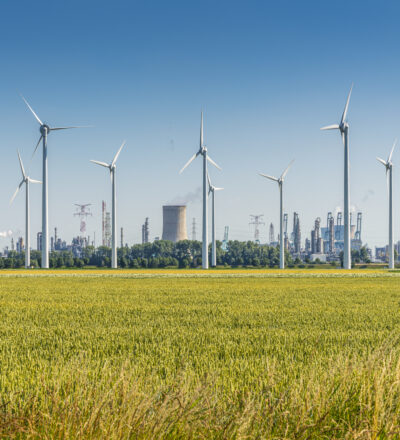
Ook de industrie heeft veel last van de hoge energieprijzen door de oorlog in en rond Iran. Dat is een extra reden voor overheid en bedrijven om de handen ineen te slaan en werk te maken van elektrificatie en verduurzaming. Niet aardgas maar (groene) stroom moet de industriële processen aandrijven. De technologie ligt klaar en dit is een hele goede casus om er nu écht vaart achter te zetten. Alleen dan doorbreek je de impasse en de afhankelijkheid van de energieprijzen op de wereldmarkt.
English version
‘Break free from dependence on the energy market’
Industry is also suffering greatly from high energy prices caused by the war in and around Iran. This is a further reason for the government and businesses to join forces and make a concerted effort towards electrification and sustainability. It is not natural gas but (green) electricity that must power industrial processes. The technology is ready, and this is a very good case for really stepping up the pace now. Only then can we break the deadlock and end our dependence on energy prices on the global market.
At the moment, everyone is waiting for the other. Industry is asking the government to keep energy prices low, whilst generally moving too slowly with electrification and sustainability measures itself. The government wants to make major investments in wind farms, solar parks and storage capacity, but it wants to be certain that industry will actually purchase that sustainable electricity. Only then can a sustainable and robust energy supply emerge with stable prices, independent of the global market. And then prices can come down too.
Decouple gas and electricity
It’s madness that the price of gas now automatically leads to higher electricity prices. Half of that electricity is already generated sustainably; that has nothing to do with gas. Decouple the two. That makes the benefits of renewable energy much clearer. A wind turbine or solar farm provides electricity for 15 to 20 years at the cost of depreciation and interest. So that can be done at a stable price over the long term. And every investment in electrification saves half the process costs.
Stabilize electricity prices
Yes, there is a grid problem in parts of the Netherlands. But in Delfzijl, Rotterdam and Zeeland, huge amounts of electricity are coming ashore. If you want to invest there with your business, connecting to the grid is really no problem. The government needs to stabilize electricity prices there in the long term so that businesses move there. A bit of market forces won’t do any harm.
And many companies can also generate renewable energy on their own premises. Every steam boiler can already be replaced by a heat pump or other alternatives. Technically, this is no problem.
Guarantee stability for investment
Sectors that use little energy can already switch to electrification, such as the food sector. But then you need to move quickly on to the chemical industry. Shell and Dow have long since calculated that their processes can be made much cheaper through electrification. That shortens the payback period. But then, as a government, you must be able to guarantee supply and stable prices; otherwise, they won’t make that investment. That is the dilemma we currently face. If the government can facilitate this and companies take the initiative, I believe we will solve a major problem.
Nu wacht iedereen op elkaar. De industrie vraagt de overheid om de energieprijzen laag te houden en elektrificeert en verduurzaamt zelf over het algemeen in een te laag tempo. De overheid wil grote investeringen doen in windparken, zonneparken en opslagcapaciteit, maar die wil zeker weten dat de industrie die duurzame stroom dan ook echt gaat afnemen. Pas dan kan er een duurzame en robuuste energievoorziening ontstaan met stabiele prijzen, los van de wereldmarkt. En dan kan ook de prijs omlaag.
Koppel stroom en gas los
Het is waanzin dat de gasprijs nu automatisch leidt tot een hogere stroomprijs. De helft van die stroom wordt nu al duurzaam opgewekt, dat heeft niks met gas te maken. Koppel dat los. Dat maakt de voordelen van duurzame energie veel duidelijker. Een windmolen of zonnepark levert 15 tot 20 jaar stroom tegen de kosten van afschrijving en rente. Dat kan dus voor een langdurig stabiele prijs. En iedere investering in elektrificatie bespaart de helft van de proceskosten.
Langdurig stabiele stroomprijs
Ja, er is een netprobleem in delen van Nederland. Maar in Delfzijl, Rotterdam en Zeeland komen gigantische hoeveelheden elektriciteit aan land. Als je daar wil investeren met je bedrijf is een aansluiting op het net echt geen probleem. Daar moet de overheid de stroomprijs langdurig stabiel maken zodat bedrijven daarheen verhuizen. Een beetje marktwerking kan geen kwaad.
En veel bedrijven kunnen ook op eigen terrein duurzame energie opwekken. Elke stoomketel kan nu al worden vervangen door een warmtepomp of andere alternatieven. Technisch geen probleem.
Garantie voor investering
Sectoren die weinig energie gebruiken kunnen nu al elektrificeren, zoals de foodsector. Maar dan moet je snel doorschakelen naar de chemie. Shell en Dow hebben allang berekend dat hun processen door elektrificatie veel goedkoper kunnen. Dat maakt de terugverdientijd kort. Maar dan moet je als overheid wel de levering en stabiele prijzen kunnen garanderen, anders gaan ze die investering niet doen. Dat is de spagaat waar we nu in zitten. Als de overheid kan faciliteren en de bedrijven het initiatief nemen, denk ik dat we een groot probleem oplossen.
Dit bericht is een reactie van Tjeerd Jongsma naar aanleiding van dit bericht: Gas- en olieprijs opnieuw verder omhoog door aanhoudende oorlog in Midden-Oosten – Industrielinqs